




Hiatal Hernia Chiropractic Care in Aliquippa, PA
If you live with heartburn that won't quit, pressure in your chest after meals, or you've already been told you have a hiatal hernia, you're in the right place. Dr. Joe Orlandini has been helping patients in Aliquippa, Hopewell, and across Beaver County for 17 years, and hiatal hernia is one of the conditions people ask him about most. Our care is gentle, and it works alongside your medical doctor.

What Is a Hiatal Hernia?
Your diaphragm is the dome-shaped muscle that separates your chest from your belly. Your esophagus, the tube that carries food to your stomach, passes through a small opening in it called the hiatus. A hiatal hernia happens when part of the stomach pushes up through that opening into the chest.
Many hiatal hernias are small and cause no symptoms at all. Larger ones can let stomach acid back up into the esophagus, which is where the heartburn and reflux come from. A hiatal hernia is diagnosed by a medical doctor, usually with an endoscopy or a barium swallow X-ray.
What Makes a Hiatal Hernia More Likely?
Hiatal hernias become more common as we get older and the tissues around the hiatus loosen. Other things that add pressure on the belly can play a part, including:
- Carrying extra weight around the middle
- Pregnancy
- Heavy lifting or straining
- A long-lasting cough
- Straining during bowel movements (chronic constipation)
Symptoms That May Point to a Hiatal Hernia
- Heartburn
- Acid reflux or GERD
- Chest pressure or fullness after eating
- Frequent belching
- Feeling full quickly
- Trouble taking a deep breath after meals
These symptoms can also come from other conditions, including heart problems. That's why it's important to have them checked by a medical doctor. See when to see a medical doctor first below.
How Dr. Orlandini Approaches Hiatal Hernia
Dr. Orlandini's approach to hiatal hernia looks at more than the stomach. The diaphragm is a muscle, and it attaches to your lower ribs and the front of your mid-to-lower spine. When the mid-back is stiff, the ribs don't move well, or the diaphragm stays tight, it can add to the pressure and discomfort you feel. Care is aimed at all of those areas together.
Your First Visit
Your first visit starts with a conversation. We'll ask about your symptoms, when they flare up, what you eat, how you sleep, and any tests, medications, or treatment you've already had. If you've had an endoscopy or barium swallow, bring the results if you can.
Next comes a hands-on exam. Dr. Orlandini checks your posture, how your ribs and mid-back move when you breathe, and the area just below your breastbone where the stomach sits. He'll explain what he finds in plain language and talk through a care plan before any treatment starts. If anything suggests you should see your medical doctor first, he'll tell you.
The Adjustment, Step by Step
Every patient is different, but a typical visit for a hiatal hernia looks something like this:
- Mid-back and rib adjustments. Gentle adjustments to the thoracic spine and ribs help them move more freely, which gives the diaphragm room to work.
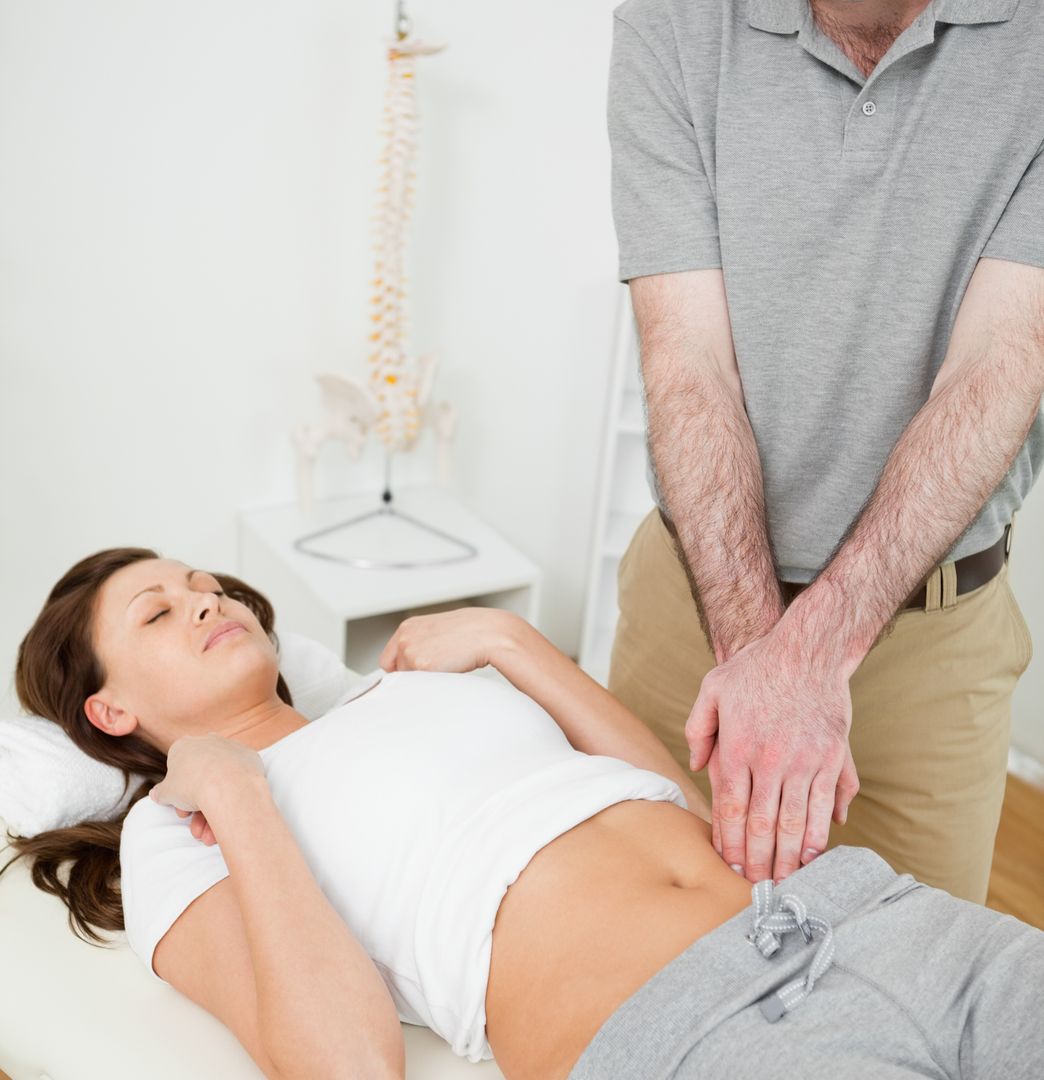
- Diaphragm release. With you lying on your back, Dr. Orlandini uses light, hands-on pressure along the lower edge of the ribs to help a tight diaphragm relax.
- Gentle abdominal technique. Using slow, steady pressure just below the breastbone, timed with your breathing, he works on the area where the stomach meets the diaphragm.
- Breathing and home care. You'll leave with a simple breathing exercise and a few habits to try between visits.
The abdominal work can feel like firm pressure, but it shouldn't be painful. You're in control the whole time, and you can ask Dr. Orlandini to ease up or stop at any point.
How Many Visits to Expect
There's no one-size-fits-all number. Your plan depends on how long you've had symptoms, how severe they are, and how your body responds. For digestive concerns, care often starts with 2–3 visits a week for the first few weeks, then tapers off as things settle down.
Some patients tell us they feel a difference after the first few visits, and others take longer. Dr. Orlandini will check in on your progress regularly, and if you're not improving, he'll say so and talk with you about other options, including going back to your medical doctor.
Working Alongside Your Medical Doctor
Chiropractic care for a hiatal hernia is complementary care. It isn't a replacement for medication, surgery, or the advice of your medical doctor or GI specialist. We encourage you to keep seeing your doctor, and we're happy to work alongside them.
Please don't stop or change any medication without talking to the doctor who prescribed it first.
When to See a Medical Doctor First
Call 911 for chest pain, especially with shortness of breath or pain spreading to your arm or jaw. Heart problems can feel like heartburn.
See a doctor promptly if you have:
- Vomiting blood, or vomit that looks like coffee grounds
- Black or tarry stools
- Trouble swallowing that's getting worse
- Unexplained weight loss
- Persistent vomiting

Spine & Diaphragm
Care focused on the mid-back, ribs, and diaphragm.
Everyday Habits
Simple changes that may ease reflux between visits.
Simple Habits That Help Between Visits
What you do between visits matters as much as what happens on the table. Small daily changes can make a real difference with reflux and hiatal hernia symptoms, and these are tips most medical doctors recommend too.
At Mealtime
- Eat smaller meals. A very full stomach puts more pressure on the diaphragm. Four or five small meals often sit better than three big ones.
- Slow down. Eating quickly means swallowing more air, which can add to belching and bloating.
- Know your trigger foods. Common ones are spicy foods, fatty or fried foods, chocolate, mint, tomato sauces, citrus, caffeine, carbonated drinks, and alcohol. Everyone is a little different, so a simple food diary can help you spot your own.
- Finish dinner early. Try to eat your last meal at least 2–3 hours before bed.
After You Eat and at Bedtime
- Stay upright. Don't lie down or recline for 2–3 hours after a meal. A short, easy walk can help.
- Raise the head of your bed 6–8 inches with blocks or a wedge pillow. Stacking regular pillows bends you at the waist and can make things worse.
- Try sleeping on your left side. Many people find they have less nighttime reflux on their left side than on their right.
Through the Day
- Loosen up. Tight waistbands, belts, and shapewear squeeze the stomach.
- Lift smart. Bend at the knees, keep loads close, and breathe out as you lift instead of holding your breath and bearing down.
- Mind your posture. Slumping after a meal compresses the belly. Sit tall, especially at a desk or in the car.
- Work toward a healthy weight. Even modest weight loss can take pressure off the stomach and diaphragm.
- Don't smoke. Smoking weakens the valve at the bottom of the esophagus that keeps acid where it belongs.
A Simple Breathing Exercise
Belly breathing (diaphragmatic breathing) helps strengthen and relax the diaphragm, and research suggests it can help some people with reflux. Try it once or twice a day, ideally not right after a big meal:
- Lie on your back or sit tall, with one hand on your chest and one on your belly.
- Breathe in slowly through your nose for about 4 seconds. Let your belly rise while your chest stays mostly still.
- Breathe out slowly through pursed lips for about 6 seconds and let your belly fall.
- Repeat for 5 minutes. If you feel lightheaded, slow down or take a break.
If you'd like help with your diet, Dr. Orlandini also offers nutritional counseling and supplements. For other gut issues like IBS, constipation, or bloating, see our digestive health care.
Coverage questions? Visit our payment options page, or call us and we'll check your benefits.
Hiatal Hernia FAQs
A chiropractor can't diagnose or surgically repair a hiatal hernia. That's for your medical doctor. What chiropractic care can do is work on the diaphragm, the mid-back, and the muscles around the upper stomach. Many patients tell us this eases their heartburn and chest pressure. We see it as complementary care that works alongside your doctor's treatment, not in place of it.
No, you don't need a diagnosis or a referral to book a visit. That said, we recommend seeing your medical doctor if you have ongoing heartburn or chest symptoms, so more serious causes can be ruled out. If you've already had tests, bring the results. If something in your exam suggests you should see a doctor first, Dr. Orlandini will tell you.
It shouldn't. The abdominal part of the adjustment uses slow, steady pressure just below the breastbone, timed with your breathing. It can feel firm or a little uncomfortable for a moment, but not painful. Some people feel mildly sore afterward, much like after a deep massage. You can ask Dr. Orlandini to ease up or stop at any time.
It depends on how long you've had symptoms, how severe they are, and how your body responds. Care often starts with 2–3 visits a week for the first few weeks, then tapers off as things improve. Some patients notice a difference within a few visits, and others take longer. Dr. Orlandini will check your progress regularly and be honest with you about it.
Keep taking it unless the doctor who prescribed it tells you otherwise. Please don't stop or change any medication on your own. Some patients find their symptoms ease with care and better habits and then talk with their doctor about their options. That decision always belongs to you and your prescribing doctor.
Many plans cover chiropractic care. We're in-network with Highmark Blue Cross Blue Shield, UPMC Health Plan, United Healthcare, Medicare, and various Blue Cross Blue Shield plans, and we offer self-pay options. Coverage depends on your plan and the care you receive, so our staff will check your benefits before your first visit.
Serving Aliquippa, Hopewell & Beaver County
Our office is on Broadhead Road in Aliquippa, an easy drive from Hopewell Township and the rest of Beaver County. If heartburn or a hiatal hernia is wearing you down, we'd be glad to help.
2284 Broadhead Road, Aliquippa, PA 15001 · (724) 378-4001


Your Path to Better Health Starts Here
New patient? Enjoy a free ice pack with your first visit and experience personalized care to support every step of your wellness journey.
Office Hours| Monday | 10:00 AM to 8:00 PM |
|---|---|
| Tuesday | 10:00 AM to 5:00 PM |
| Wednesday | 10:00 AM to 2:00 PM |
| Thursday | 10:00 AM to 5:00 PM |
| Friday | 10:00 AM to 3:00 PM |
| Saturday | Closed |
| Sunday | Closed |
